Welcome to RTC-SDD Challenge

The first speech deepfake detection challenge in real-time communication.

Speech deepfake detection is becoming increasingly important, as modern text-to-speech and voice conversion systems are now capable of generating highly natural and identity-consistent speech. In practice, the threat is not limited to clean audio files distributed offline. More severe attacks may occur in online meetings, social calls, remote identity verification, and cross-platform voice communication.

The RTC-SDD (Real-Time Communication Speech Deepfake Detection) Challenge aims to promote robust and generalizable detection methods for real-world speech deepfakes in real-time communication scenarios.

We welcome participants from academia and industry to join this challenge and work together to advance speech security.

Challenge 1

Black-box Processing

Internal processing pipelines of RTC platforms are not exposed, making their behavior difficult to analyze.
Challenge 2

Robustness

Shifting from traditional noise robustness to robustness against distortions introduced by the speech processing pipeline in RTC transmission.
Challenge 3

Generalizability

Generalizing to unseen speakers, unseen generators, and unseen RTC platforms.

Challenge Timeline

Keep track of the key dates for challenge participation and submission.

September 1, 2026
Release of baseline code and progress-stage dataset.
November 9, 2026
Release of final evaluation data.
November 16, 2026
Final result submission deadline.
November 23, 2026
Release of challenge results and final ranking.
December 7, 2026
Two-page paper submission due for invited teams.
January 11, 2027
Paper acceptance notification.
January 18, 2027
Camera-ready two-page paper due.

* Please note that all deadlines are 11:59PM on the respective day as per US Pacific Time.

Contact Us

For registration, dataset access, submission format, Codabench issues, or challenge rules, contact the organizing team.

rtcsddchallenge2027@gmail.com

Leaderboard

Track results and rankings during the challenge period.

Progress Evaluation Stage

Rank Team Organization Clean Macro-F1 Noisy Macro-F1 Final Macro-F1
Not available yet

Final Evaluation Stage

Rank Team Organization Clean Macro-F1 Noisy Macro-F1 Final Macro-F1
Not available yet

RTC-SDD Challenge

Speech Deepfake Detection Challenge in Real-Time Communication

Why RTC-SDD?

Most existing speech deepfake detection benchmarks focus on offline audio files. However, real-world attacks often take place in online meetings and social communication scenarios. In these cases, speech is transformed by RTC pipelines before reaching the receiver, and detection systems must operate on the transmitted signal rather than the original generated waveform.

The RTC-SDD Challenge investigates this more realistic setting. It evaluates whether detection systems can remain reliable when generation artifacts are degraded, reshaped, or entangled with platform-specific communication artifacts.

Scenario

Post-RTC detection

Detection is performed on speech after RTC transmission, where spoofing cues are degraded by platform processing and network transmission.

Goal

Robustness and Generalizability

Build robust speech deepfake detection systems that generalize across generators, noise conditions, and RTC platforms.

RTC-SDD Dataset

RTC-SDD construction pipeline: speech construction, noise simulation, and real-time communication

Step 1: Speech Construction. Real speech is collected and spoofed speech is generated using ten state-of-the-art TTS/VC synthesis technologies, covering diverse generation mechanisms and spoofing artifacts.

Step 2: Noise Simulation. After dataset partitioning into training, development, and evaluation subsets, environmental noise simulation is applied to the evaluation set, including echo, keyboard, footsteps, rain, office, and coffee-shop sounds.

Step 3: RTC Transmission. The resulting speech data are transmitted through seven mainstream social media and meeting platforms, including QQ, Zoom, WeChat, DingTalk, Lark, VooV, and Telegram. This produces RTC-transmitted online samples that better reflect real-world communication scenarios.

Task Definition

Participants submit a spoof-likelihood score for each utterance ID in the official evaluation list, where higher scores indicate a higher probability of spoofed speech. Labels remain binary, bonafide or spoof, regardless of whether the audio is offline or RTC-transmitted.

The organizers provide training and development data with both offline speech before transmission and online speech after transmission. The evaluation set contains only online speech after RTC transmission. It includes a clean online subset and a noisy online subset; noisy speech is reserved for evaluation and is not included in the training or development sets. Some evaluation samples are transmitted through unseen RTC platforms.

Evaluation Metric

The official evaluation metric is Macro-F1 over the spoof and bonafide classes:

Macro-F1 = 1/2 (F1sp + F1bf).

The clean and noisy online subsets are evaluated separately, with their Macro-F1 scores denoted as Fclean and Fnoisy. The final score is computed as:

Macro-F1final = λ Fclean + (1 - λ) Fnoisy, where λ = 0.3.

This weighting assigns more importance to the noisy subset, encouraging robust detection under challenging RTC conditions.

Instructions

Recommended participation workflow from registration to final submission.

1

Register your team

Complete the registration form with your team name, member names, contact emails, affiliation, and Codabench account information, and then register for the challenge on Codabench. Your registration is successfully completed once you receive the confirmation email from Codabench.

Registration Form Codabench
2

Download dataset and baseline

Use the official RTCFake dataset and baseline code as the starting point. Keep train, development, progress, and evaluation partitions logically separated.

3

Train and validate your system

Train on the official training data, tune on the development set, and report validation performance. Avoid using progress or final evaluation data for tuning or analysis.

4

Submit predictions on Codabench

Prepare a two-column score file using the required format: utterance_id score. Scores should be normalized to [0, 1].

Codabench

Rules

Guidelines for participation, data use, submissions, and reproducibility.

1

Participation

Participants may join individually or as a team. Each participant can be affiliated with only one team during the challenge.

2

Data usage

The official training and development sets can be used for model training, validation, and model selection. The use of external speech datasets for training or fine-tuning is not permitted. Progress and final evaluation sets must not be used for training, parameter tuning, model selection, pseudo-labeling, manual annotation, or manual analysis.

3

Data augmentation

Participants may use public data augmentation methods or design their own augmentation strategies, but any external data introduced during augmentation must come from publicly available non-speech datasets. Official data must not be transmitted through RTC platforms for augmentation.

4

External resources

Publicly released pretrained model weights and standard offline augmentation methods are allowed. Closed-source model services, proprietary model APIs, and unpublished private weights are not allowed.

4

Model ensemble

Model ensembles are not permitted. Each submission must be generated by a single model and must not combine predictions, scores, or outputs from multiple independently trained models.

5

Submission policy

Submissions should follow the official Codabench format. Each score must correspond to exactly one utterance in the official evaluation list. Submissions should be provided as a two-column text file, with each line formatted as "id score".

6

Reproducibility

Top-ranked teams invited to submit papers should provide sufficient technical details, including model architecture, training strategy, augmentation, external resources, and hyperparameters.

Organization

Meet the organizing team of the RTC-SDD Challenge.

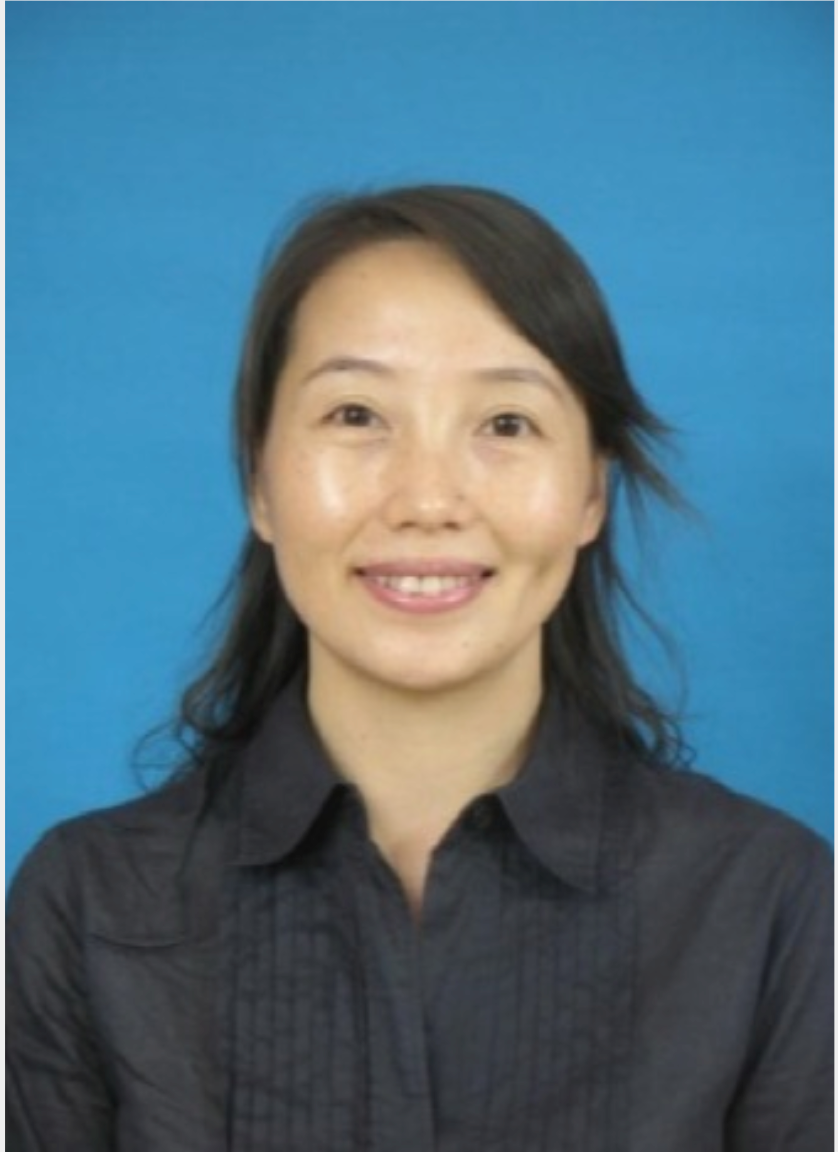
Zhen-hua Ling
Zhen-Hua Ling
University of Science and Technology of China, China
Professor

Questions about RTC-SDD?

For any question about registration, dataset access, baseline code, submission format, or rules, contact the RTC-SDD Challenge team.

rtcsddchallenge2027@gmail.com